Drug Addiction After Tonsillectomy Surgery
For many people reaching for the aspirin bottle at the first sign of a headache or joint tenderness is as natural as reaching for the remote when they don’t like what’s on television. Instant, inexpensive relief for minor aches and pains is as near as the closest grocery or pharmacy, with no prescription necessary.
When over-the-counter pain medications fall short of relieving discomfort, however, prescription pain medicines may be in order. These remedies can be short-term godsends for people following surgery or serious injury. Doctors also prescribe them for disease-related pain. Some of these drugs, however, carry a serious risk of addiction
Many widely prescribed pain medications contain opium-based chemicals. Opiates include heroin as well as medications like methadone, morphine, oxycodone and codeine. These extremely effective analgesics are also extremely addictive. The National Institutes of Health estimates that nearly 9 percent of the U.S. population misuses to an opiate at least once. That abuse sometimes leads to addiction.
Pain Medicine Addiction in Surgical Patients
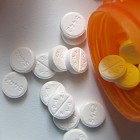
Doctors prescribe opiates to help their surgical patients recover. The Cleveland Clinic advises that continuing post-surgical pain can interfere with proper healing. Pain-free patients become active more quickly. They can participate in breathing exercises or walking to speed their recoveries.
Yet some post-surgical patients hesitate to ask for help with their pain because they worry about pain medicine addiction. How realistic are their concerns about pain medicine addiction?
The great majority of patients realize that these narcotics are meant to alleviate their physical pain, not their emotional or psychological problems. They’re willing to manage their pain responsibly. Medical technology company Medtronic estimates that the odds of a surgical patient developing a pain medicine addiction are approximately one in 10,000.
Physical Dependency vs. Pain Medicine Addiction
Patients face a slightly greater risk of coming physically dependent on pain medication while under their physicians’ care. This condition isn’t the same thing as opiate addiction. The National Institutes of Health defines a physically dependent surgical patient as one who “needs the substance to function.” This individual experiences powerful cravings for the drug.
An addicted patient, on the other hand, has an uncontrollable compulsion to use the medication. This individual’s psychological need for the drug is at least as strong as the physical one. Both dependent and addicted patients require carefully tailored withdrawal programs to wean them from the pain medications.
How Physical Dependency and Addiction Develop
Physical dependency on pain medicine develops after a period of continuous use. How long a period varies from patient to patient. Opiate addiction expert David Courtwright suggests 10 to 14 days as a representative time span in his book “Dark Paradise: Opiate Addiction in America.”
The ongoing use raises tolerance to the drugs’ pain-reducing properties. Patients need stronger and stronger doses of their medications to achieve relief. They experience physical withdrawal symptoms after discontinuing their drugs.
Opiates are capable of causing both physical dependency and psychological addiction. A patient may become physically dependent without being addicted. Addicts are both physically and psychologically dependent. They’ll resort to any means to get their drugs, regardless of the potential for ruining their health, relationships and lives.
Withdrawing from Pain Medicine
Breaking a physical dependency on pain medication can produce serious symptoms. They include:
• Headaches
• Nausea and vomiting
• Constipation
• Tremors
• Chills
• Insomnia
• Muscular and skeletal pain
The safest and most comfortable way to beat physical dependency is to cut back on the medicine gradually, under a doctor’s supervision. As medication levels in the blood decrease, so do the patient’s physical cravings.

As a chronic condition, pain medicine addiction can leave a patient open to relapse after mastering the physical dependency. Addicts continue to battle powerful desires for the drugs, even after successfully abstaining for long periods. For these people, successful treatment often requires psychological counseling from a therapist trained to treat addiction.
I have personally experienced symptoms of pain medicine withdrawal after tonsillectomy surgery.
I had my tonsillectomy on 3/9, so I’m going into my 12th day. I had a really tough recovery with lots of pain, but the past 2 days I have felt pretty much back my usual self. I had been taking liquid oxycodone every 4 hours (5 mL), (more time between doses in the last few days taking it) and my last dose of that was 48 hours ago.
Now an entirely new problem has come up for me. Insomnia. It has been absolutely horrible. These past 2 nights I cannot sleep no matter how badly I want to. I toss and turn in bed and I think it’s making me go crazy. My elbows ache and I am never comfortable. I was planning on returning to school today (I’m 19 and my college is a 3 hour drive away) but now I’m not sure what to do. How long will this insomnia last?? Please help 🙁
Hi everyone,
Today is my 10th day since my tonsillectomy & adenoidectomy. I was on 2 x 5mg endone and 2 x panadol every 4 hours and during the really hard pain (you know it if you’ve had a tonsillectomy, it feels like someone slitting your throat) I was on 1 x 15mg Oxycodone and 2 x panadol every 4 hours. On the 8th day in the morning I had my last 15mg Oxycodone in the morning.
As the pain had subsided from a 10/10 to a 2/10 I decided to only take panadol when I needed it and to ditch the prescription pain meds cold turkey. Yesterday (9th day post-op) was normal, I was eating solid foods and felt great. Today, however, being the 10th day I woke feeling awful.
I have had the runs, felt hot & cold, restless legs, sick in the stomach, sweats and depressed. I’m not going to lie, I had taken endone recreationally like a week or two before the operation because I’m a flat out idiot. So realistically, I have been taking endone/oxy for about a month, so I’m guessing this is why the cold turkey withdrawals have been horrendous. I deserve it. But I just need to vent. I had an entire packet left of endone that I’ve just flushed despite really craving taking some just to feel better.
I don’t ever want to go through this again. Hopefully these symptoms only last a few more days and I’ll be back to normal before the new year.
My advice to people taking these pain meds is to really consider the consequences of taking them and not to take it as lightly as I have.
I’ve found, despite it being difficult, drinking sugary coffees and drinking sugary drinks to help with the symptoms. Try so stomach a little food, even if you bring it up again. Rest and watch feel good movies (Disney). Cold flannel on the head. Fan on high. Showers. And flush those remaining pills that you have left laying around or give them to a responsible family member or friend for safe keeping.
I’ll be posting an update in a few days xo
Hi, I really want to share my experience with you guys. This is my 13thday recovery of tonsillectomy. My doctor didn’t mention about the effects of the medication my medicine was Tramadol + Paracetamol Algesia 37.5MG/325MGTAB. This is my 3rd sleepless night. Yesterday was the worst I was crying AL DAY, I was too emotional, I feel like alone, I feel so lonely. This is the worst thing that ever happen to me. I will get back to my doctor tomorrow and will find out what is happening to me and will confirm if I’m really experiencing is normal and how to handle it.
I had my tonsillectomy 15 days ago and was taking 15ml of liquid hydrocodone every 6 hours. I had to get a refil on my medication because the pain was so severe and I ran out of the first bottle after the first week. Today is my 3 day being off the drug an the withdrawal symptoms are almost worse than dealing with the pain. I was very uninformed and my doctor didn’t mention anything about tapering off the medication or about the withdrawal effects. I can’t get any sleep at night. Period. I lay in be awake all night long. Nothing works not even sleeping pills. My entire body aches especially my back and my head. I have random uncontrollable fits of crying and also uncontrollable yawning. I was supposed to go back to work yesterday but I had to call in and take the day off because I got no sleep and threw up all morning. Never again.
I experienced withdrawal from oxycodone even though I gradually tapered down my doses from every 4hrs, to every 6 hrs, to every 8 hrs, to every 12 hrs, to only at bedtime. The first night I didn’t take it I had insomnia, muscle spasms and restless limbs, uncontrollable yawns, chills and tremors, and headache! It was awful! I also had a runny nose and goosebumps for a few days. But I only had two nights of insomnia. After that, it was fine. It’s worth it I think just considering how painful the surgery is!
Definitely take food with any painkillers. I just had a small amount of yogurt when I wasn’t able to actually eat anything. The yogurt (kefir) made it so that I was never nausea or vomiting. I also had anti-nausea medication with my codeine, that really helped!